
Industrial equipment · Sustainable packaging manufacturing
Pulp fiber shaping equipment line: how molded paper products get made
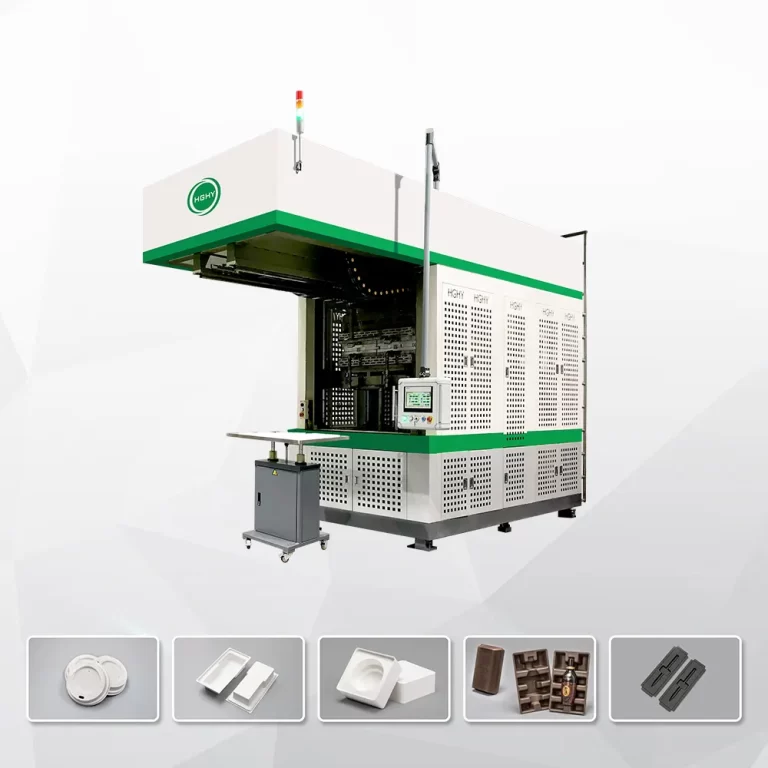
What a pulp fiber shaping line actually does
The term "pulp fiber shaping equipment" covers the full chain of machines that turn raw fiber — recycled cardboard, waste paper, bagasse, wheat straw, or bamboo pulp — into a rigid, molded object like a tray, box, or protective packaging insert. It's a different discipline from plastic thermoforming, even though the finished shapes can look similar on a shelf.
A typical line runs through five stages, in this order:
- 1 Pulping. Raw fiber material is broken down in a hydrapulper with water into a slurry of loose fibers.
- 2 Forming. The slurry is drawn onto a mesh mold under vacuum, where fibers deposit into the shape of the mold cavity.
- 3 Transferring and pressing. The wet product moves to a hot-press mold that squeezes out remaining moisture and sets the final shape and surface finish.
- 4 Drying. Depending on the line, drying happens either in-mold through hot pressing, or in a separate drying tunnel for thicker products.
- 5 Trimming and stacking. Excess fiber edges are trimmed, and finished pieces are counted and stacked automatically.
Where equipment differs most from one manufacturer to the next is mold precision, vacuum consistency, and how well forming and pressing stay synchronized. Get any one of these out of alignment and the result is thickness variation — the single most common quality complaint in molded pulp production.
Why this matters for packaging buyers, not just factory owners
Most people researching this topic are either setting up a pulp molding workshop or expanding an existing line — often for trays used in food service, electronics packaging, or agricultural egg and fruit trays. The economics look simple on paper: fiber is cheap, and regulation pushing single-use plastic out of food packaging across the EU and parts of Asia has kept demand for molded pulp trays climbing.
What's less obvious until you're standing in front of the machine is how much mold configuration determines what you can actually sell. A forming mold with eight cavities producing takeaway trays runs on a completely different cycle time than a mold making thicker, structural produce trays. Buyers who don't ask enough questions about mold count, cycle time, and drying capacity often end up with a machine that technically works but can't hit the output their business plan assumed.
Reading a manufacturer's equipment line correctly
When evaluating a pulp fiber shaping line, a few numbers matter more than the marketing copy around them:
| What to check | Why it matters |
|---|---|
| Forming station count | More stations raise hourly output, but also add maintenance points |
| Vacuum pump capacity | Undersized pumps are a common cause of thin spots and holes |
| Drying method | Hot-press drying is faster and smoother; tunnel drying costs less upfront |
| Mold material and cavity count | Sets design flexibility and long-term tooling replacement cost |
HGHY Packaging's paper tray making machine is a reasonable example of how a mid-to-large capacity line is typically configured, since it covers pulping, forming, and hot-press drying in one connected setup rather than requiring buyers to source and integrate separate machines. Lines built this way tend to be easier for a first-time buyer to commission, since the pulping-to-forming ratio is already balanced by the manufacturer instead of left for the buyer to work out.
Common mistakes in sourcing this equipment
Underestimating water treatment needs
The pulping and forming stages use significant water volume, and most of it needs to be recirculated rather than discharged. Skipping proper water treatment or recycling either creates regulatory problems or drives up operating costs fast.
Ignoring mold customization lead time
Molds are the part of the line that actually defines the product, and custom tooling for a new tray shape can take several weeks. Buyers who order the machine first and think about mold design later frequently delay their own production start by a month or more.
Assuming rated capacity equals real output
Manufacturers quote capacity under ideal conditions. Real-world output depends on fiber quality, operator experience, and how well the drying stage keeps pace with forming — a mismatch here is the most common bottleneck in the first few months of operation.
What good equipment sourcing looks like in practice
The producers who get this right tend to do a few things before signing a purchase order: request video of the line running an actual production cycle, not just a demo clip; ask what fiber source the machine was tested with, since bagasse and recycled cardboard behave differently in the pulper; and confirm what after-sales support looks like once the machine is installed overseas, since mold wear and vacuum system maintenance are ongoing needs, not one-time setup issues.
Pulp fiber shaping is a mature technology at this point — the physics of vacuum-forming wet fiber hasn't changed much in decades — but the quality gap between a well-built line and a poorly matched one still shows up clearly on the factory floor. The equipment itself rarely fails outright; it's mismatched expectations about capacity, mold flexibility, and drying method that cause most of the disappointment buyers report after installation.
Frequently asked questions
What's the difference between hot-press drying and tunnel drying?
Hot-press drying sets and dries the product inside the mold in one step, which is faster and gives a smoother, denser surface. Tunnel drying handles moisture removal separately after forming, which costs less to tool up but adds time to the overall cycle and generally suits thicker, less finish-sensitive products.
How long does it take to get a new mold made?
Custom mold tooling typically takes several weeks depending on the tray's complexity and the manufacturer's queue. This is usually the longest lead-time item in setting up a new line, so it's worth starting mold design in parallel with equipment ordering rather than after.
Can one line run different fiber sources, like both recycled cardboard and bagasse?
Most lines can handle a range of fiber sources, but pulping settings and drying times usually need adjustment when switching materials, since fiber length and moisture behavior differ. It's worth confirming with the manufacturer which fiber types the line was tested and calibrated against.