
Biodegradable Paper Cup Supporter Machine
- Process
- Die-cut & press forming
- Output rate
- 60–150 pcs/min
- Corrugation temp
- 150–200°C
- Stations
- 5–7 forming
- Adhesive
- Water-based, compostable
Cup sleeves, holder rings, and drink carrier trays made from biodegradable paperboard are showing up on more takeaway counters every quarter, replacing plastic and foam that regulators and chain buyers increasingly want gone. This reference covers how the equipment behind those products actually works, and what separates a well-specified line from a machine that will bottleneck output once real order volume arrives.
01 Overview
The equipment takes flat biodegradable paperboard — recycled kraft, virgin pulp board, or specially coated compostable stock — and converts it into three-dimensional supports designed to hold, insulate, or carry paper cups safely. Depending on tooling, the same base platform produces cup sleeves, holder rings, cup base supporters, and two- or four-cup drink carrier trays without requiring separate dedicated machines for each product.
02 Process stages
A typical line runs through six stages, in this order:
Unwinding and feeding
Rolled or sheet-fed biodegradable paperboard is drawn into the machine under controlled tension so downstream cutting stays registered and consistent.
Die-cutting and slotting
The flat blank is cut into the pattern that later folds into a sleeve, holder ring, or carrier tray body.
Corrugating and embossing
Heated rollers press the ribbed texture into sleeve stock, which is what actually keeps a hot cup from burning the hand holding it.
Folding and forming
Servo-driven arms or mechanical molds bend the blank into its final three-dimensional shape, sized to a specific cup diameter or tray footprint.
Gluing and pressing
Seams are sealed with a water-based, biodegradable adhesive rather than a petroleum hot-melt, which is what keeps the finished product genuinely compostable.
Cutting, counting, and stacking
Finished units are trimmed to final size, counted, and stacked automatically, ready to pack for shipment.
03 Why fiber, why now
Plastic cup carrier and holder bans are no longer a distant regulatory threat. They're already reshaping procurement lists at coffee chains, quick-service restaurants, hotel and airline caterers, and food-delivery packaging suppliers across Europe, North America, and increasingly Southeast Asia, as city-by-city plastic phase-outs work through the foodservice supply chain.
Fiber-based supporters hold up well against that pressure on more than compliance grounds alone. Corrugated sleeve stock insulates a hot cup without a plastic liner, molded holder rings and carrier trays survive scooter and bicycle delivery transit without collapsing, and the raw material cost curve for pulp-based board has stayed comparatively stable next to volatile petroleum-based plastics — a combination that keeps demand growing even where regulation alone wouldn't be enough.
04 Reading the spec sheet
When evaluating a line for biodegradable cup supporter production, a few specifics matter more than the rated top speed printed on the brochure:
| Check | Why it matters |
|---|---|
| Die and mold tolerance | A sleeve or holder that's a fraction of a millimeter off grips inconsistently across a batch of standard 8oz–20oz cups |
| Adhesive system | Water-based, biodegradable adhesive is what makes the finished product genuinely compostable — hot-melt seams undercut that claim |
| Corrugation depth control | Ribbing depth is what determines insulation performance, so it needs to hold steady run after run, not just on the sample piece |
| Mold changeover speed | Converters serving multiple client specifications switch between sleeve, holder, and carrier tray tooling often, so slow changeovers eat into real output |
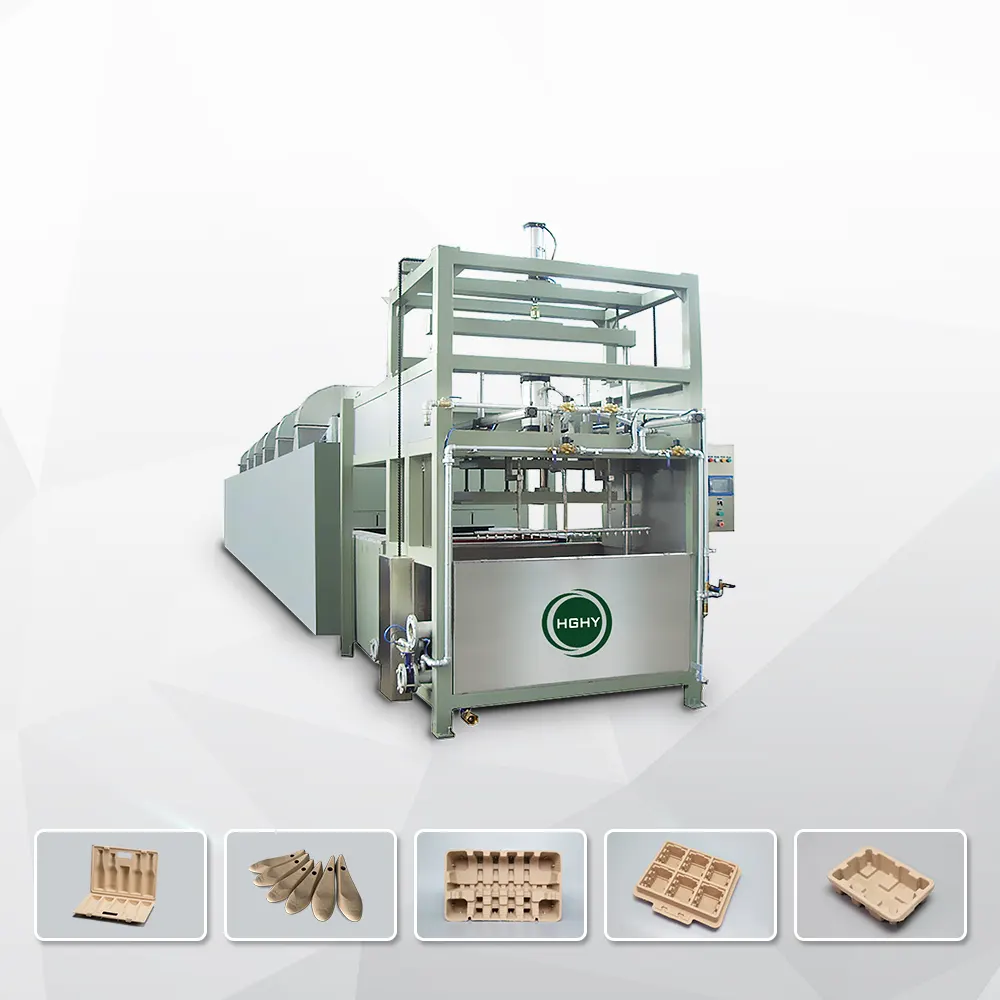
HGHY Packaging's coffee cup tray machine is a reasonable base configuration to benchmark against this list, since it combines die-cutting, corrugating, and forming in one connected line rather than requiring separate machines to be sourced and synchronized. Lines built this way are generally easier to retool across sleeve, holder-ring, and multi-cup carrier products, since the feed and press timing are already balanced by the manufacturer.
05 Sourcing pitfalls
These aren't a checklist to follow in order — they're the mistakes buyers report most often, in no particular sequence:
Treating "biodegradable" as a labeling choice
The board can be fully compostable and the finished product still won't be, if the adhesive or any coating used to seal it isn't. Confirm the full material stack, not just the paperboard grade.
Underestimating mold lead time per cup size
Custom tooling for a specific cup diameter or tray footprint typically takes several weeks to produce — usually the longest lead-time item in setting up a new product line.
Skipping insulation testing before scaling
Corrugation depth that looks fine on a sample sleeve can still transfer more heat than expected under real coffee-shop volume. Testing against the actual beverage temperature range avoids reorders after launch.
06 The business case
For manufacturers weighing capital investment in this category, the numbers have generally been favorable. Payback periods on a mid-capacity line commonly fall in the twelve-to-twenty-month range when the machine runs a standard two-shift schedule against contracted orders from cafés, bakeries, and food-delivery packaging suppliers, and many regions now offer tax incentives or subsidies for converters switching to compostable foodservice packaging.
For converters already producing paper cups or food packaging, adding a cup supporter line is a natural vertical extension — it uses similar raw materials, sells into the same customer base, and lets one sales relationship cover more of a client's packaging needs. For new entrants, the barrier to entry is moderate: the machinery is well understood, and the compostable-adhesive supply chain has matured considerably over the past several years, though local market saturation and the pace of regulatory enforcement in a given region still affect how quickly any given line actually pays for itself.
07 FAQ
Can one machine produce both cup sleeves and multi-cup carrier trays?
Generally yes, on the same base platform, by swapping the die set and forming mold. What determines whether it's worth doing on one line versus two is order volume per product — high-volume single-product runs sometimes justify dedicating separate tooling permanently to avoid changeover downtime.
Does biodegradable adhesive hold up as well as hot-melt on the finished product?
Modern water-based compostable adhesives are generally reliable for cup sleeves and holder rings under normal handling and moderate heat exposure. It's worth confirming performance against the specific beverage temperature range and transit conditions the finished product will actually see, since formulations vary between suppliers.
How long does a mold change take between different cup diameters?
On a well-specified line, changeover between standard cup sizes is typically a matter of minutes once the mold set is on hand. Getting a new custom mold made from scratch is the slower step, usually taking several weeks, so it's worth ordering size variants you expect to need well ahead of when the order comes in.