
Foodservice packaging is going through a quiet but decisive shift. Plastic clamshells and foam lunch boxes are being pulled off the shelves — sometimes by regulation, sometimes by the buyers themselves, who no longer want their brand associated with single-use plastic. What replaces them, in most cases, is molded pulp: plates, bowls, trays and containers pressed from plant fibre that breaks down instead of lingering for centuries.
For a manufacturer, the appeal is straightforward. A single molded pulp dining ware line can turn one raw material into an entire catalogue of foodservice items, all of them compostable, all of them ready for a market that is actively looking for alternatives to plastic. Understanding how that line works — and what it can realistically produce — is the first step for anyone weighing the move into this category.
What a molded pulp dining ware line actually makes
The term covers more than just plates. A well-configured line produces the full spread of items a restaurant, canteen or takeaway operation needs:
- Plates — from small dessert sizes to large dinner plates, flat or compartmented.
- Bowls — for soup, cereal, salad or rice, in a range of depths and volumes.
- Trays — cafeteria trays, meat and produce trays, sectioned serving trays.
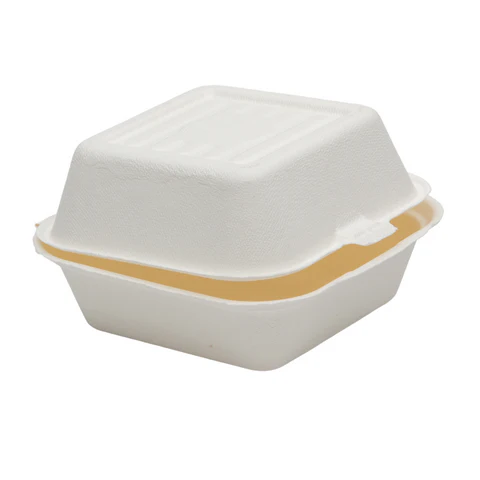
- Clamshell containers — hinged boxes for burgers, sandwiches and full meals, with lids that close and stay shut.
- Lunch boxes — single- and multi-compartment boxes for takeaway and meal delivery.
- Food containers — round or rectangular tubs for sides, salads and hot dishes, often paired with matching lids.
Switching between these products is largely a matter of changing the mould. The core process — pulping, forming, hot-pressing, trimming — stays the same. That flexibility is what makes a molded pulp line attractive: one investment, a product range broad enough to serve an entire foodservice supply chain.
Bagasse and the rise of molded pulp tableware
The material doing most of the heavy lifting in this category is bagasse — the fibrous residue left over after sugarcane is crushed for its juice. It used to be burned as waste. Now it is one of the most sought-after raw materials in the packaging world, and for good reason.
Bagasse tableware handles heat, oil and moisture well enough to hold a full hot meal without going soft, and its fibres press into a clean, rigid surface that looks and feels closer to premium packaging than to a paper plate. Because it is an agricultural by-product, it is abundant and inexpensive in sugar-producing regions. And it is fully compostable — a bagasse clamshell that ends up in an industrial composting stream breaks down into soil rather than microplastic.
Molded pulp tableware made from bagasse — often blended with a share of wood pulp for extra strength and a smoother finish — has become the default choice for brands that want their packaging to carry an environmental message without sacrificing performance. It is microwave- and freezer-friendly in most formulations, and it carries no plastic lining when produced on a proper hot-press line.
How the line turns fibre into finished tableware
The process behind a molded pulp dining ware line follows a logical sequence, and each stage shapes the quality of what comes out the other end.
Pulping
Bagasse, wood pulp or recovered fibre is broken down in water into a smooth, even slurry. Consistency here matters: an uneven pulp means uneven products downstream, so the mix is refined and screened before it moves on.
Forming
The slurry is drawn onto moulds shaped like the target product — a plate, a clamshell, a lunch box. Vacuum pulls the water through the mould, leaving a wet fibre shape that already carries the geometry of the finished item.
Hot-pressing
This is the step that separates disposable tableware from simple packaging trays. The formed shape is pressed between heated moulds, which drive out remaining moisture and set the fibres into a hard, smooth, dimensionally stable product. Hot-pressing is what gives a bowl its rigidity and a clamshell lid its clean closing edge, and it is what allows the finished item to resist oil and water without a plastic film.
Trimming and finishing
The edges are trimmed — increasingly by in-line robotic trimming — for a neat rim and a low reject rate. The finished tableware is then counted, stacked and packed, ready for shipping.
The equipment behind the line
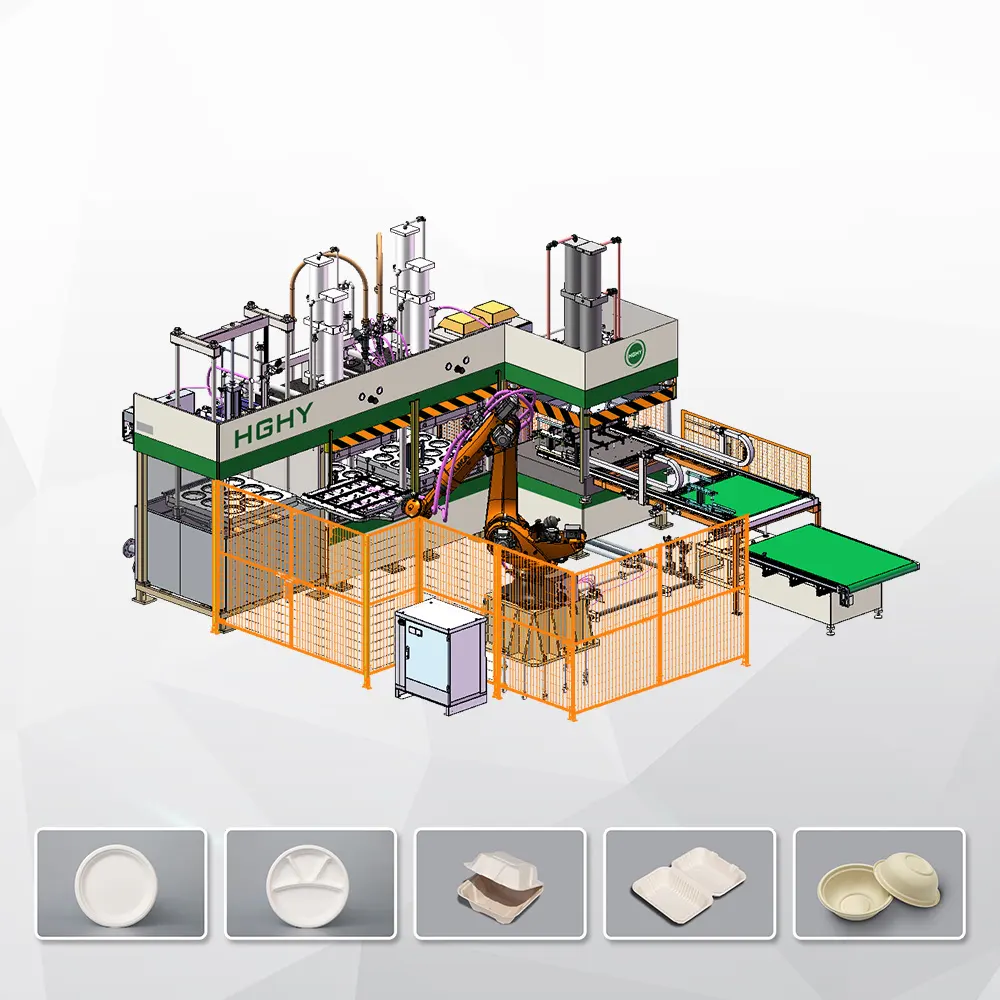
A dining ware line is only as good as the machine at its centre. The wet-press thermoforming equipment built by HGHY is designed for exactly this category — turning bagasse and recovered fibre into plates, bowls, clamshells, lunch boxes and food containers on a single platform, with reciprocating forming, servo-hydraulic hot-pressing and servo five-point-linkage trimming integrated in line.
Several of these features map directly onto the demands of foodservice tableware. The servo-hydraulic hot-press stage — rated up to 60 tons — is what delivers the oil and water resistance a hot meal requires, without any plastic lining. The servo five-point-linkage trimming keeps edges clean and waste low — important when margins on disposable items are thin. And the customizable heating option lets a factory match its energy source to whatever is cheapest locally, since drying and pressing are the largest running cost in molded fibre production. Self-locking and auto-stop safety design keeps the line within reach of ordinary line operators.
The 80 mm forming height, paired with a 1100 × 1100 mm platen, is worth noting for anyone planning a broad catalogue: it is the difference between being limited to flat plates and being able to mould deep bowls, tall lunch boxes and clamshell containers on the same line.
Experience and track record
Choosing an equipment supplier is as much about their history as their spec sheet. HGHY has supported more than 300 clients across over 60 countries in setting up their production. That breadth of installations — across different markets, fibre supplies and product mixes — is a reasonable indicator that the lines perform consistently rather than only under ideal lab conditions.
A few practical reference points for anyone planning a project:
- Manufacturing and shipping typically run about 130 days after the order is placed and the deposit and/or letter of credit is in place.
- Installation is supervised by two dispatched technicians, with commissioning generally taking 60 to 90 days depending on the scale of equipment.
- Return on investment, based on completed projects, tends to fall in the range of two to three years.
Why the timing favours this category
The pressure on single-use plastic is not easing — it is spreading, from consumer cutlery into transport and foodservice packaging. Restaurants, delivery platforms and retailers are all being pushed toward materials that compost rather than pollute, and molded pulp tableware sits squarely in the middle of that demand.
For a manufacturer, the logic is simple: a molded pulp dining ware line converts a cheap agricultural by-product into a full range of products the market is actively asking for. Plates, bowls, trays, clamshells, lunch boxes and food containers — all from one line, all compostable, all aligned with where packaging regulation is heading rather than against it.