
Molded Fiber Medical Container Making Machine
- Process
- Wet-press pulp molding
- Cycle time
- 15–40 sec
- Mold temp
- 120–180°C
- Stations
- 6–12 forming
- Contact surface
- Stainless / hygienic
Sterile trays, diagnostic kit holders, and instrument packaging made from molded pulp are showing up on more hospital shelves every year, replacing plastic that regulators and procurement teams increasingly want gone. This reference covers how the equipment behind those containers actually works, and what separates a line built for medical-grade output from a general-purpose molding setup.
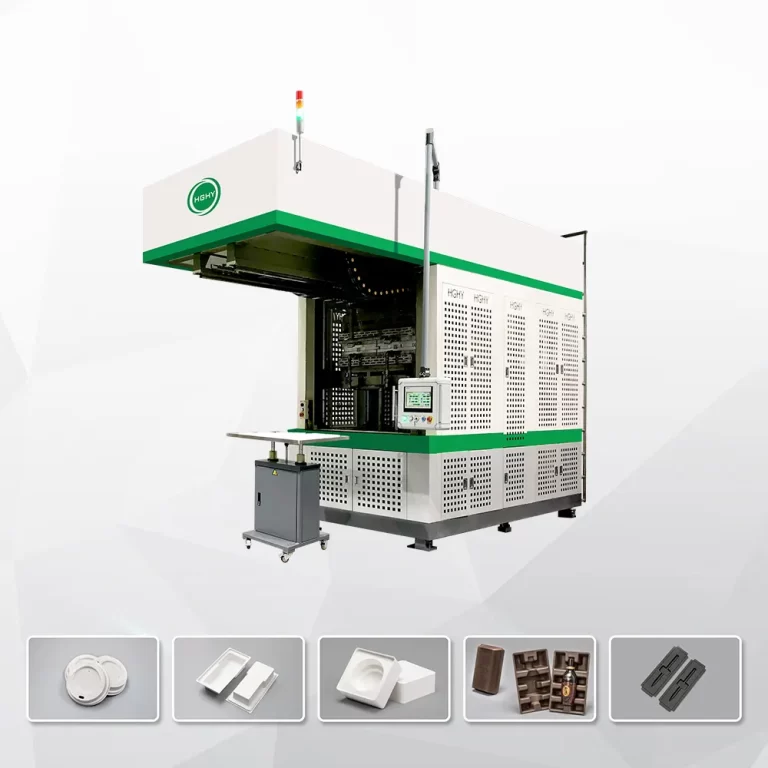
01 Overview
The equipment takes raw pulp — typically recycled cardboard, waste paper, or virgin fiber — and turns it into rigid, precisely shaped trays, sterilization containers, and protective inserts for the healthcare sector. It runs the same fundamental process as general molded-pulp equipment, but with production standards built around cleanliness and dimensional accuracy that food-service or industrial packaging lines don't need to meet.
02 Process stages
A typical line runs through five stages, in this order:
Pulping
Raw fiber material is broken down in a hydrapulper with water into a slurry of loose fibers, screened to remove contaminants before it reaches the forming stage.
Forming
The slurry is drawn onto a mesh mold under vacuum, where fibers deposit into the shape of the tray or container cavity.
Transferring and pressing
The wet product moves to a hot-press mold that squeezes out remaining moisture and sets the final shape, wall thickness, and interior surface finish.
Drying
Most medical-grade lines dry in-mold through hot pressing rather than a separate tunnel, since it gives a smoother, denser, more consistent surface.
Trimming and stacking
Excess fiber edges are trimmed, finished containers are inspected, and stacked automatically ahead of packing.
03 Why fiber, why now
Regulatory pressure on single-use plastics has tightened across North America, Europe, and much of Asia, and medical packaging is no longer exempt. Molded fiber offers a genuine alternative: biodegradable, largely made from recycled material, and increasingly favored by hospital procurement policies and government health agencies.
Beyond the environmental case, the material performs well in sterile packaging specifically. It cushions instruments naturally, reducing the need for secondary foam inserts, and it holds its shape under autoclave and ethylene oxide sterilization cycles when the mold and drying process are engineered for it — something plastic alternatives can't always match without added cost.
04 Reading the spec sheet
When evaluating a molded fiber line for medical container production, a few specifics matter more than the marketing copy around them:
| Check | Why it matters |
|---|---|
| Mold precision / repeatability | Medical trays often need to nest instruments securely, so tolerance matters more than in general packaging |
| Contact surface material | Stainless steel and enclosed pulp handling reduce contamination risk during production |
| Sterilization compatibility | Finished containers should be validated against the actual sterilization method — steam, dry heat, or gas |
| Mold changeover speed | Medical device makers often run smaller batches of specific tray shapes, so quick changeovers matter |
HGHY Packaging's paper tray making machine is a reasonable base configuration to benchmark against this list, since it covers pulping, forming, and hot-press drying in one connected setup rather than requiring separate machines to be sourced and integrated. Lines built this way are generally easier to adapt with hygienic tooling upgrades for a medical-grade production run, since the core pulping-to-forming ratio is already balanced by the manufacturer.
05 Sourcing pitfalls
These aren't a checklist to follow in order — they're the mistakes buyers report most often, in no particular sequence:
Treating "medical-grade" as a checkbox
Not every molded fiber line is suited to medical output out of the box. Sterilization testing is often where surface finish or wall consistency gaps show up first.
Validating sterilization too late
The finished container needs testing against the specific sterilization method it will undergo. Ordering equipment first and validating compatibility later is a frequent source of rework.
Underestimating mold lead time
Custom tooling for a specific tray or nesting shape typically takes several weeks — usually the longest lead-time item in setting up a new line.
06 The business case
For manufacturers weighing a switch from injection-molded plastic trays to fiber-based alternatives, the calculation increasingly favors fiber. Raw material costs for recycled pulp tend to run lower and more stable than petroleum-based plastics, and many regions now offer tax incentives or expedited approvals for sustainable packaging suppliers. Equipment suppliers with experience in the medical segment typically also assist with mold design and sterilization validation support, shortening the path from purchase to certified production.
07 FAQ
Can a standard pulp molding machine be upgraded for medical-grade output?
Sometimes, but it usually requires swapping in stainless steel contact components, tightening mold tolerances, and re-validating the finished product against a sterilization method. It's often more cost-effective to specify medical-grade requirements at the point of purchase than to retrofit later.
Does molded fiber packaging need a protective coating for sterile use?
Some applications add a food- or medical-grade barrier coating to control moisture resistance, but many sterilization-compatible trays are used uncoated, depending on the sterilization method and downstream handling. Worth confirming with the equipment and mold supplier together.
How long does it take to get a new mold made for a custom tray shape?
Custom mold tooling typically takes several weeks depending on the tray's complexity and the manufacturer's queue. It's usually the longest lead-time item in setting up a new line, so it's worth starting mold design in parallel with equipment ordering rather than after.